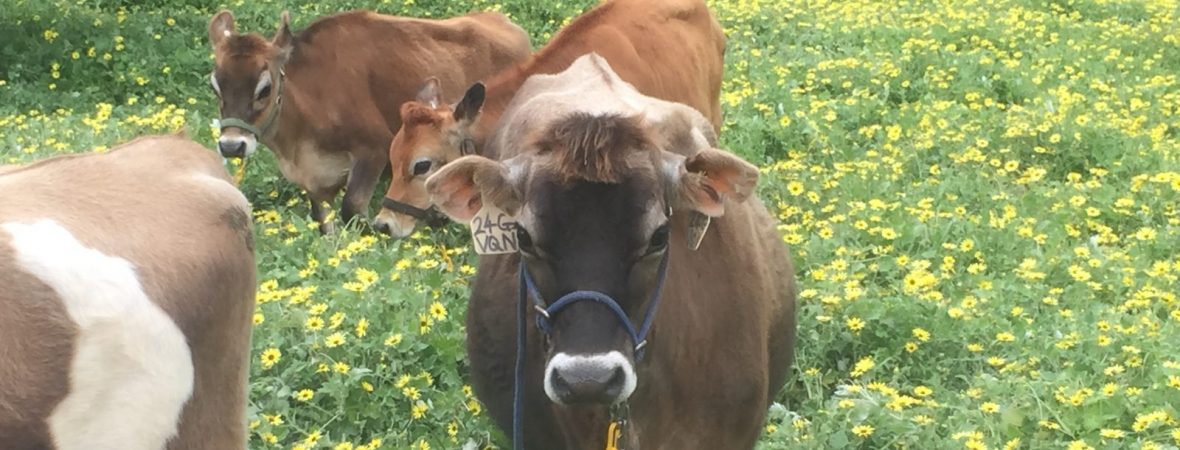
DON’T PANIC!
I’ve put these two videos here so that you can see what a normal calving looks like. I’ve seen quite a few now but still panic. The cow has usually been in labour for several hours prior to this stage. You may see her arch her back and strain, or rock from side to side shifting the weight on her back legs. Towards the final stage she may paw the ground and get up and down a few times.
First you will see one foot (hope it’s a front one) then a second followed by the tongue. That’s a really nasty stage as you will think the poor thing has suffocated. It’s normal for the feet to in and out a few times; then with any luck eventually it will slither out onto the floor much to the cow’s surprise.
I look at my phone/watch and take a note of the time so I don’t panic. My cows generally take up to an hour from the time they are really pushing hard to the time when the calf is actually born. The very last stage after the membranes and feet appear may take half an hour.
Preparation
Make sure you have a safe dry area that you can put her when she is a few days from calving. Preferably calf proof with ring lock fencing so she can’t post it under a fence into the river. I like to have my cows away from the others but close enough for company. It is also important to have good access to this area in case you do need a vet. If the vet has to pull the calf out with chains they may need to bring their vehicle in close.
In winter I put them into a stable so we also have lights. Having the cow close by makes things easier when you are doing your nightly checks; you don’t have to get wet or roam around the paddock in your nightie with a torch looking for her. Your vet will appreciate this (if one is called). Cows and calves are special and valuable so do everything you can to prepare just in case something goes wrong.
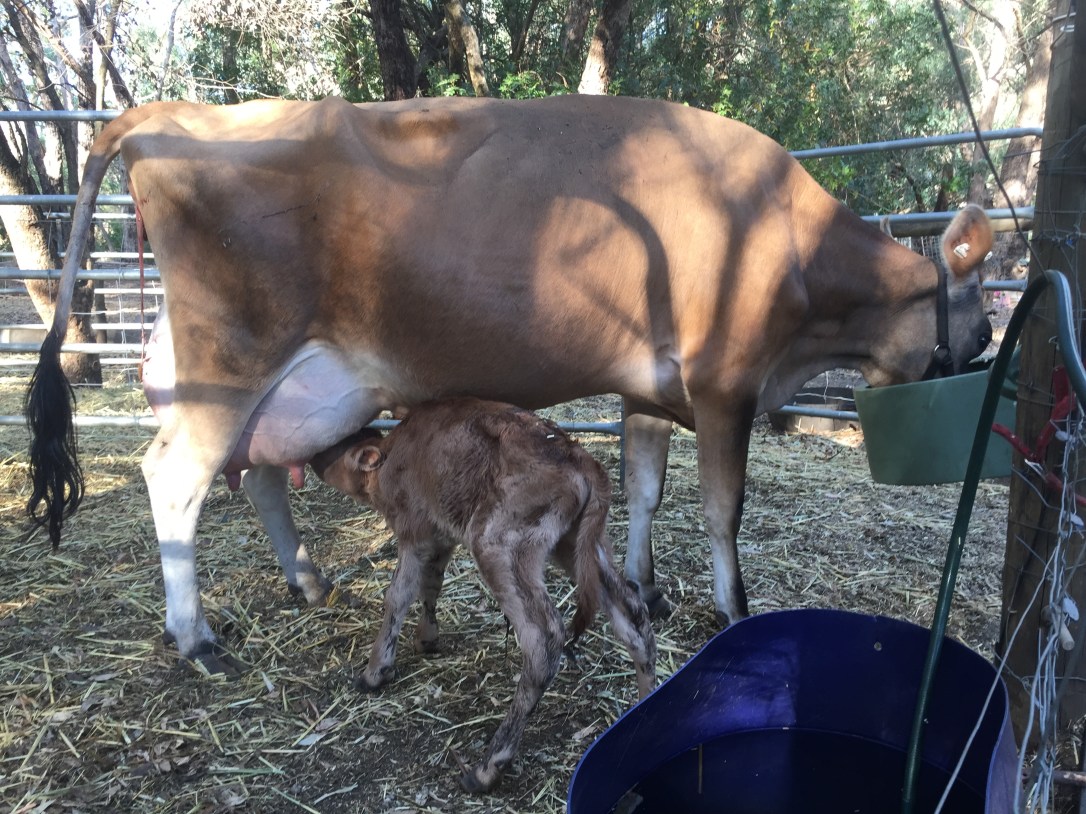
However, more often than not you will simply get up in the morning and see this.

Imminent Signs of Calving
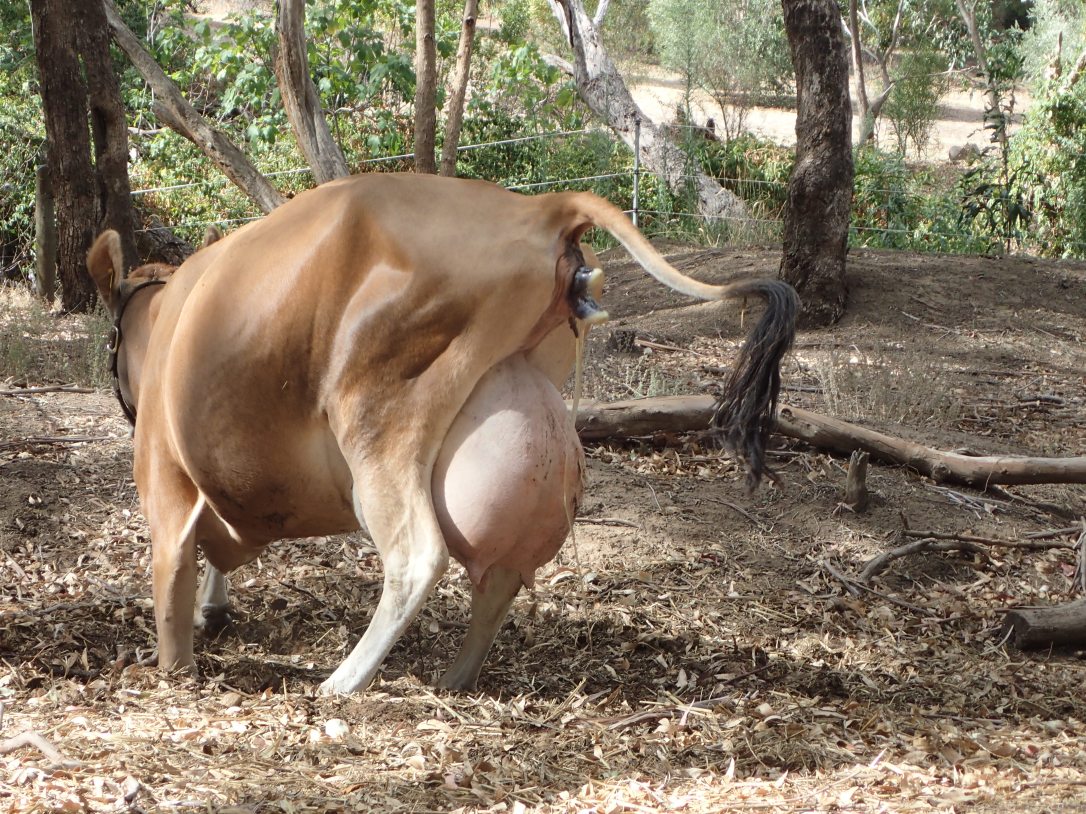
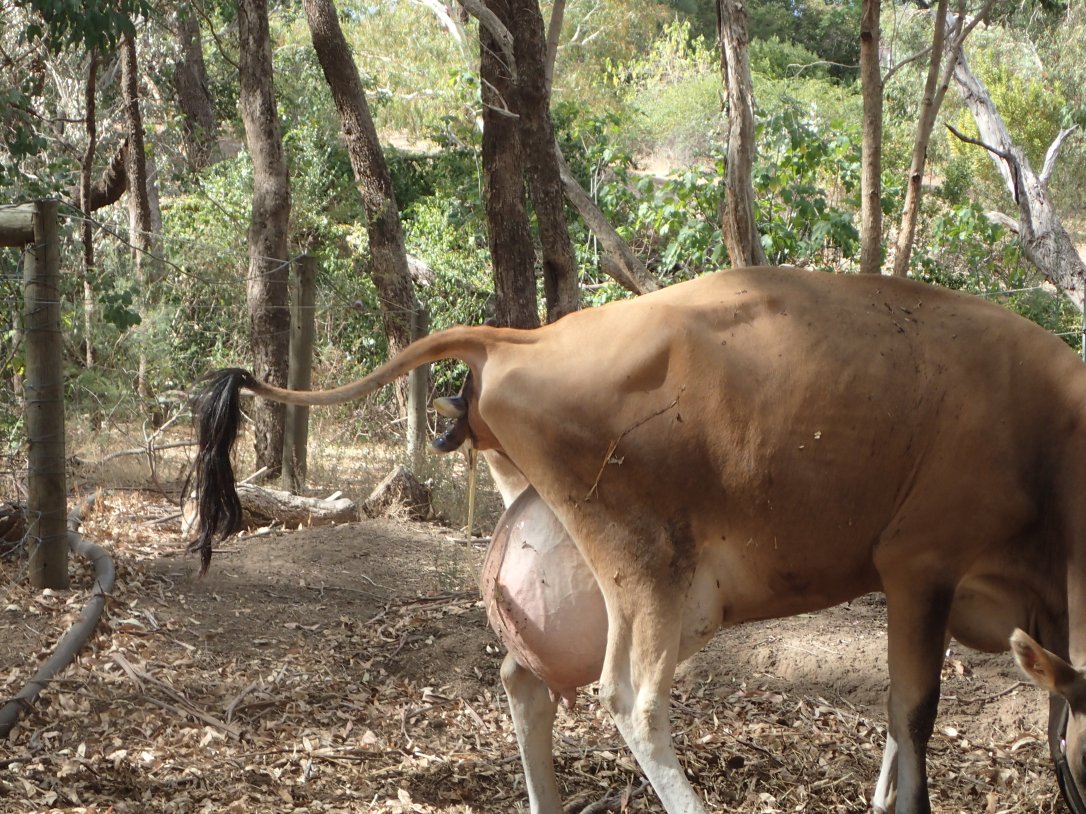
Below is a photo of Stacey about 24 hours away from calving. Note the deep groove between her tail and her pin bones. Also the very full udder with the teats strutting (sticking out sideways). Other signs include swelling and looseness around the vulva and some clear discharge.


Pictured below you will see the cervical plug. This was from Daisy and was on her tail 7 days before she calved.

A happy outcome
 Local House Cows